Commercial roofing for Class A, B, and C office buildings, suburban office parks, and downtown towers throughout Indianapolis, IN.
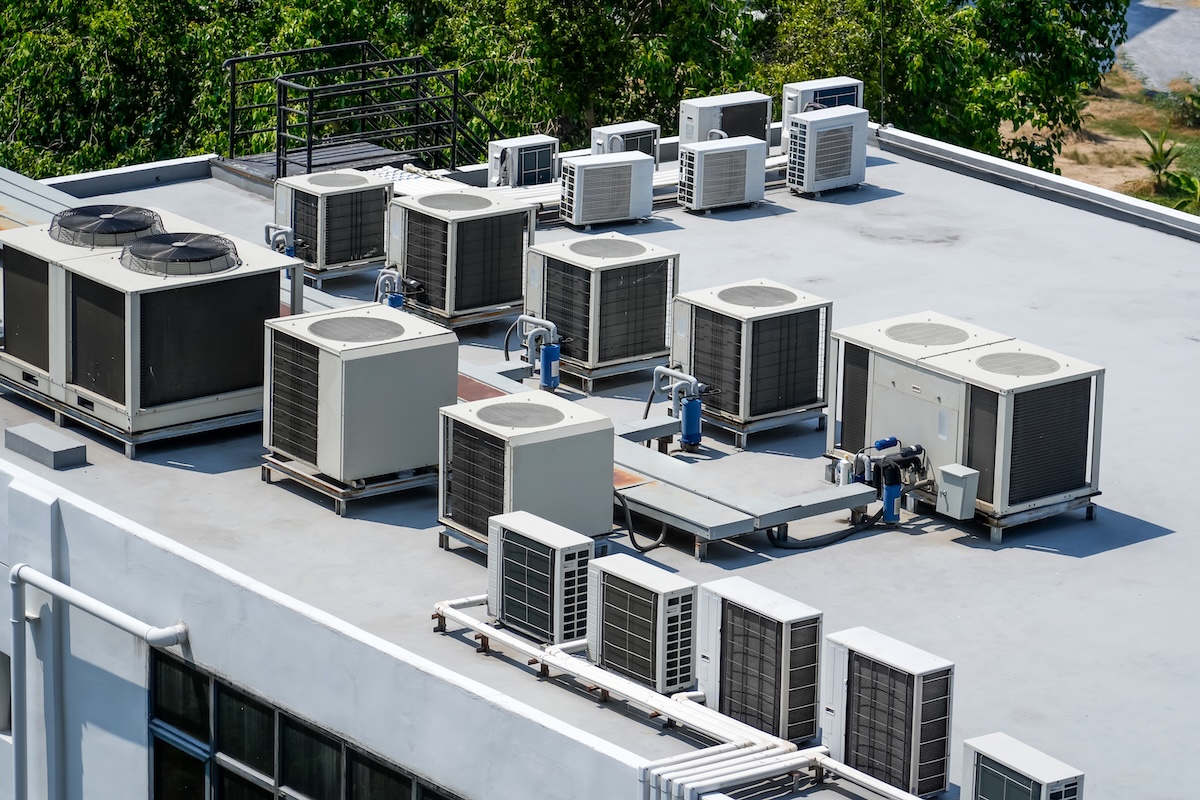
Office buildings in Indianapolis — from Class A towers near Monument Circle to suburban office parks along the I-465 corridor — share a set of roofing demands that distinguish them from warehouse or industrial work: occupied tenant spaces directly below the membrane, roof penetrations that multiply with every HVAC unit, data line, and exhaust stack added over the building's life, and ownership groups that need professional documentation for tenant leases, insurance renewals, and capital planning. Commercial roofing on Indianapolis office buildings requires a contractor who understands both the technical system and the business context around it.
Low-slope office buildings in Central Indiana are most commonly roofed in TPO, EPDM, or modified bitumen systems, with some older Class B and C stock still carrying aging built-up roofing (BUR). Mid-rise and high-rise buildings downtown may have a combination of low-slope membrane sections and steep architectural elements (metal coping, decorative cornices, mansard sections). Each system type has a distinct maintenance and replacement profile. TPO is the current dominant installation for new construction and re-roof on the I-465 corridor; EPDM remains prevalent on 1980s–2000s suburban office stock; modified bitumen appears on buildings where multi-ply redundancy was prioritized. Correct system identification drives the right repair or replacement approach.
Office buildings accumulate roof penetrations over their operating life at a rate that often surprises building owners. Every HVAC unit, data conduit, plumbing vent, kitchen exhaust fan, and electrical conduit represents a flashing penetration that requires periodic inspection and maintenance. On a 20-year-old Indianapolis office building, it is common to find 40 to 100-plus penetrations in various states of flashing integrity. Failed pitch pans, cracked pipe boot flashings, and separated counter-flashings at HVAC curbs are among the most common leak sources on office roofs. A thorough condition inspection catalogs every penetration by type and flashing condition — this is a prerequisite for any reliable leak assessment.
Marion County's climate imposes specific stress patterns on office building roofs. Freeze-thaw cycling (25-plus cycles per year in Indianapolis) fatigues flashing sealants, caulked joints, and pitch-pan fill on penetrations. Spring rainfall events — Indianapolis averages 42 inches of annual precipitation — stress drainage systems and expose any low-point ponding condition. Summer UV loading on dark single-ply membranes accelerates seam adhesive degradation in older systems. Midwest thunderstorms occasionally produce hail events that require professional assessment to document damage versus pre-existing wear, particularly for insurance claim purposes. Rooftop HVAC maintenance activity by mechanical contractors — who may not be roofing-aware — can create punctures or displaced flashing that only become apparent on the next rain.
Tenant relationships are a primary concern on occupied Indianapolis office buildings. Cold-adhesive single-ply and fully adhered EPDM systems minimize odor and noise compared to torch-applied systems. Mechanically attached TPO is the fastest installation method for large low-slope areas and generates less rooftop activity per square foot than adhered systems, reducing the duration of impact on tenants below. Pre-project sequencing plans, tenant notification letters coordinated with property management, and daily cleanup protocols are standard on commercial office roofing projects. We provide a written project schedule and access plan before mobilization.
Office building owners and property managers regularly face documentation requests from tenants, lenders, and insurance carriers regarding roof condition and warranty status. A well-managed roofing project provides a chain of documentation that supports these requirements: a pre-installation condition report, material specifications and manufacturer certifications, installation inspection records, and manufacturer warranty registration documentation. We provide a complete closeout package within 10 business days of project completion, formatted to support commercial lease disclosure requirements and insurance renewal submissions.
Every office building roofing project delivers a written scope with material specifications, a pre-installation photo condition log, installation documentation sufficient for manufacturer warranty registration, a final walk-through report, and signed warranty documentation. Manufacturer NDL (No Dollar Limit) warranties on qualifying TPO and EPDM systems range from 15 to 20 years. Workmanship warranty is provided in writing. Capital planning support — including a projected maintenance schedule and estimated replacement horizon — is available as part of the closeout package on request.
Tell us about the building and the roof problem. We'll document it and put a plan in writing — with an honest repair-vs-replace recommendation and no upsell pressure.
Get a Roof Assessment →