Single-ply commercial roofing installation across Indianapolis — TPO, EPDM, and PVC systems for flat and low-slope commercial buildings in Marion County and the Indianapolis metro, with manufacturer warranty documentation.
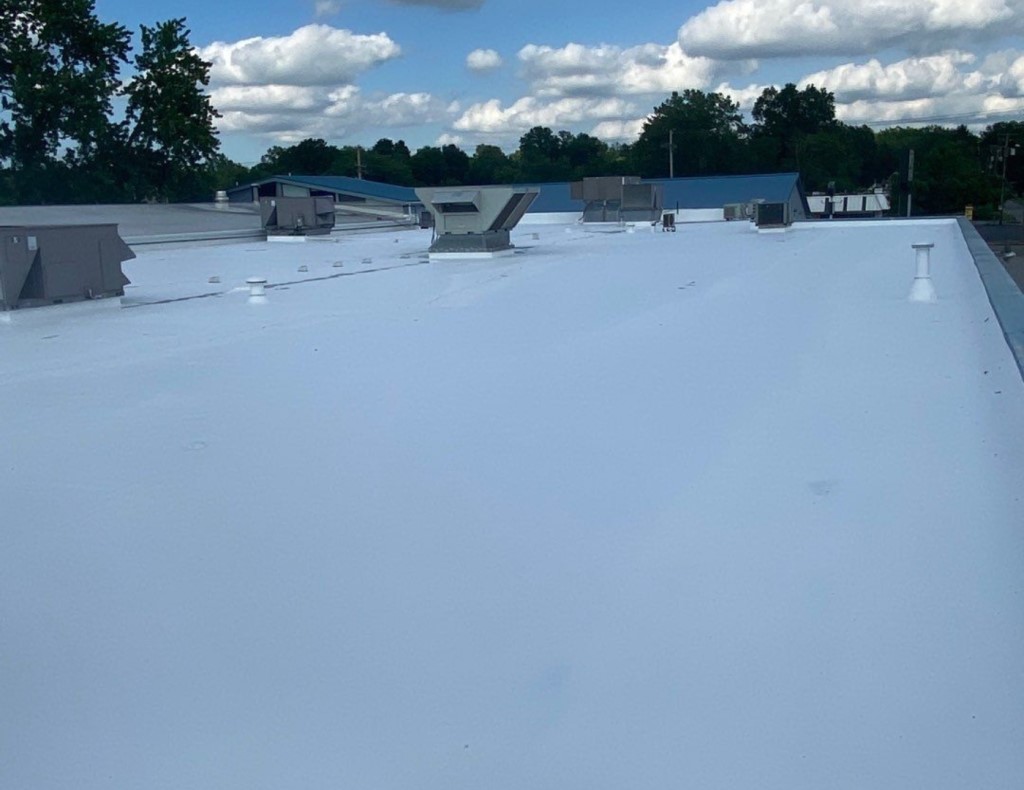
Single-ply roofing systems — TPO, EPDM, and PVC — are the dominant choice for commercial flat and low-slope buildings across Indianapolis and Marion County. Their combination of installation speed, long-term durability, manufacturer warranty options, and adaptability to occupied-building conditions makes them the go-to replacement system for virtually every commercial flat roof application in Central Indiana. Commercial Roofers Indianapolis installs, repairs, and recovers all three single-ply membrane types, and provides written guidance on which system is the right fit for each building's use, budget, and climate exposure.
TPO (thermoplastic polyolefin) is the most widely installed single-ply membrane across Indianapolis commercial buildings. Its white reflective surface lowers rooftop temperatures in Indiana summers, and its heat-welded seams create a monolithic membrane that resists wind uplift and moisture intrusion. EPDM (ethylene propylene diene monomer) is a rubber membrane that has been used on Indianapolis commercial buildings since the 1970s. Its long track record of durability, low cost, and flexibility in cold temperatures make it a reliable choice for buildings where reflectivity is not a priority. PVC (polyvinyl chloride) is the preferred membrane for Indianapolis restaurants, food processing facilities, and buildings with rooftop grease exhaust, because it is chemically resistant to animal fats and oils that degrade TPO and EPDM.
Single-ply membranes can be attached to the building in three ways, each with different implications for Indianapolis buildings. Mechanically attached systems fasten the membrane at seams with fasteners driven into the deck; they are fast to install and work on most deck types but allow minor billowing in high-wind conditions. Fully adhered systems bond the membrane directly to the insulation board; they provide superior wind resistance and are preferred for Indianapolis buildings in exposed or high-elevation positions. Ballasted systems hold the membrane down with rounded stone; they are uncommon on Indianapolis commercial buildings because the added weight requires structural verification and the stone can shift during the severe storm events that affect Central Indiana.
Central Indiana's temperature swings — from minus-five Fahrenheit in January to ninety-five in July — place thermal cycling stress on all roofing membranes. Single-ply systems handle this well because they are inherently flexible and expand and contract without cracking. EPDM performs particularly well in Indianapolis winters because its rubber formulation remains pliable at low temperatures. TPO's white surface provides meaningful energy performance benefits in Indianapolis summers by reflecting solar radiation that would otherwise heat the building interior. The freeze-thaw cycles that damage masonry and metal flashings are managed by proper single-ply termination and counterflashing details that allow movement without membrane tearing.
Many Indianapolis commercial buildings are candidates for a single-ply recover — installing a new membrane over the existing system without a full tear-off. A recover is permitted by building code when no more than one existing layer of roofing is in place and when the existing substrate is structurally sound and has insulation moisture content below code thresholds. A recover saves disposal costs, reduces project duration, and avoids exposing the building interior to Indianapolis weather during a tear-off sequence. The decision to recover versus replace is based on core sampling and infrared moisture survey, not assumptions.
For a standard Indianapolis commercial flat roof replacement with TPO, the process begins with tear-off and debris removal, deck inspection and repair of any damaged substrate, installation of insulation board in the specified R-value, and membrane installation starting at the lowest edge and working upward. All seams are heat-welded and probed for continuity. Flashings are installed at all penetrations, parapet walls, drains, and curbs. The project concludes with a final inspection walk, drain flow verification, and submission of warranty registration documentation to the manufacturer.
Tell us about the building and the roof problem. We'll document it and put a plan in writing — with an honest repair-vs-replace recommendation and no upsell pressure.
Get a Roof Assessment →