Occupied Building Re-Roofing for commercial buildings across Indianapolis.
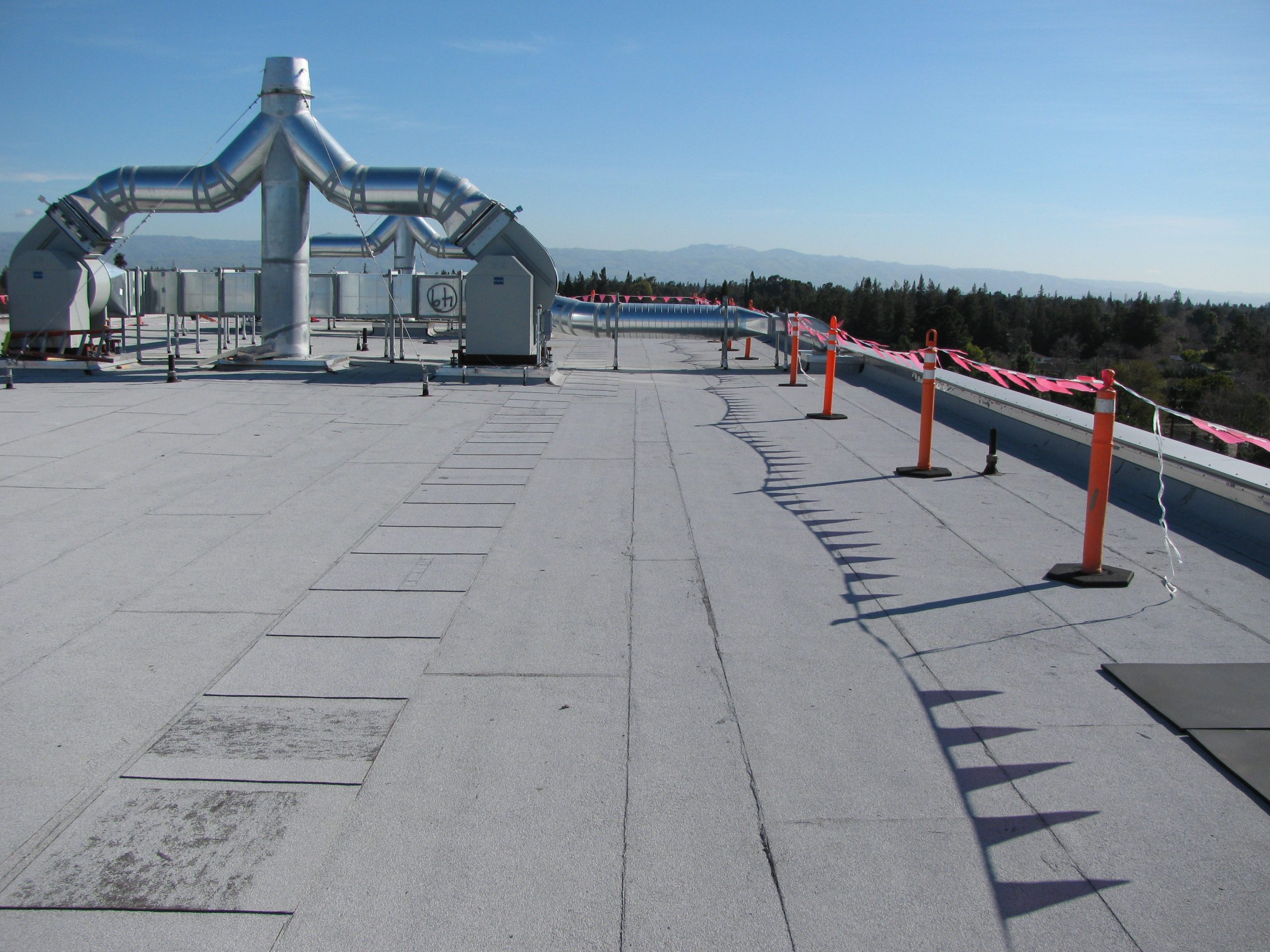
Re-roofing an occupied commercial building introduces logistical and safety considerations that a vacant-building project simply does not have. Indianapolis property managers overseeing retail centers, medical offices, schools, and multi-tenant industrial parks face the challenge of completing a full tear-off and membrane replacement without displacing tenants, disrupting daily operations, or creating liability exposure inside the building. Occupied building re-roofing is a specialty sequencing discipline that addresses all three concerns through pre-planned work zones, daily closure schedules, and coordinated communication with tenants and building management.
In a vacant building, the entire roof can be stripped and replaced as fast as crew and weather allow. In an occupied building, exposing the deck above active tenant spaces creates interior water risk on any afternoon when Indianapolis weather changes — and Central Indiana weather changes fast. The sequencing model for occupied re-roofing divides the roof into zones small enough to complete membrane installation in the same workday the deck is exposed, ensuring no open deck remains unprotected overnight or during a weather hold.
Noise, vibration, and fumes are secondary concerns. Tear-off equipment produces significant impact noise that disrupts call centers, medical imaging suites, and classrooms. Solvent-based adhesives used in some membrane systems off-gas into HVAC intakes if not coordinated with the facilities team. Pre-project planning identifies noise-sensitive hours and confirms adhesive type before work begins.
Indianapolis freeze-thaw cycles make phased scheduling especially important. If a project spans the October-to-March window, temporary edge metal and lap seals must be weather-tight at every day's stopping point because overnight temperatures routinely drop below freezing. Snow loading on partially completed zones must also be planned for; membrane installation cannot proceed on frozen or snow-covered deck sections. Project managers scheduling occupied re-roofing in Central Indiana typically build weather buffers into the phase plan to accommodate the unpredictable shoulder seasons.
Before the first day of work, the roof is divided into zones mapped against tenant suite locations below. Zones are sequenced to prioritize the least-sensitive areas first, giving the crew time to refine workflow before reaching tenant spaces with tighter constraints. Each tenant receives advance written notice of their zone's scheduled dates, the anticipated noise window each day, and a contact number for the project supervisor. Where occupied space is directly below an open deck section, temporary interior protection — plastic sheeting, absorbent pads, and monitored drainage — is set in place before tear-off begins that day.
Access to roof hatches, mechanical equipment, and HVAC units must remain functional throughout the project. The work sequence is planned around maintenance access routes so rooftop equipment can be reached for emergency service during the re-roofing window.
Tear-off debris in an occupied-building project cannot be tossed into an open dumpster at ground level the way it can at a vacant site, because pedestrian areas below are active. Debris chutes or contained drop zones are established at approved locations, typically at building corners away from entries and parking areas, and cleared throughout the day rather than at shift end. Loose fasteners and membrane scraps are swept and collected continuously because a single fastener in a parking lot creates a liability event and a tenant relations problem.
Low-odor or water-based adhesive formulations are specified wherever possible when re-roofing occupied buildings in Indianapolis, particularly where HVAC fresh-air intakes are located within 50 feet of work zones. Mechanically fastened TPO or EPDM systems are often preferred because they eliminate solvent adhesives entirely while still producing durable seams. When building geometry requires adhered installation, the facilities team coordinates temporary HVAC damper adjustments for the adhesive application windows.
Occupied building re-roofing projects close out with the same documentation package as a standard re-roof: manufacturer warranty, workmanship warranty, a marked-up roof plan, core-cut records, and photo documentation of deck condition zone by zone. The marked-up plan is especially valuable in occupied buildings because it maps penetrations above specific tenant suites, supporting future leak-response triage without requiring a full roof walk to locate the source.
Tell us about the building and the roof problem. We'll document it and put a plan in writing — with an honest repair-vs-replace recommendation and no upsell pressure.
Get a Roof Assessment →