BUR assessment, replacement, and recover for aging Indianapolis commercial buildings — honest recover-vs-replace guidance, moisture core sampling, and deck condition investigation for Indiana's freeze-thaw conditions.
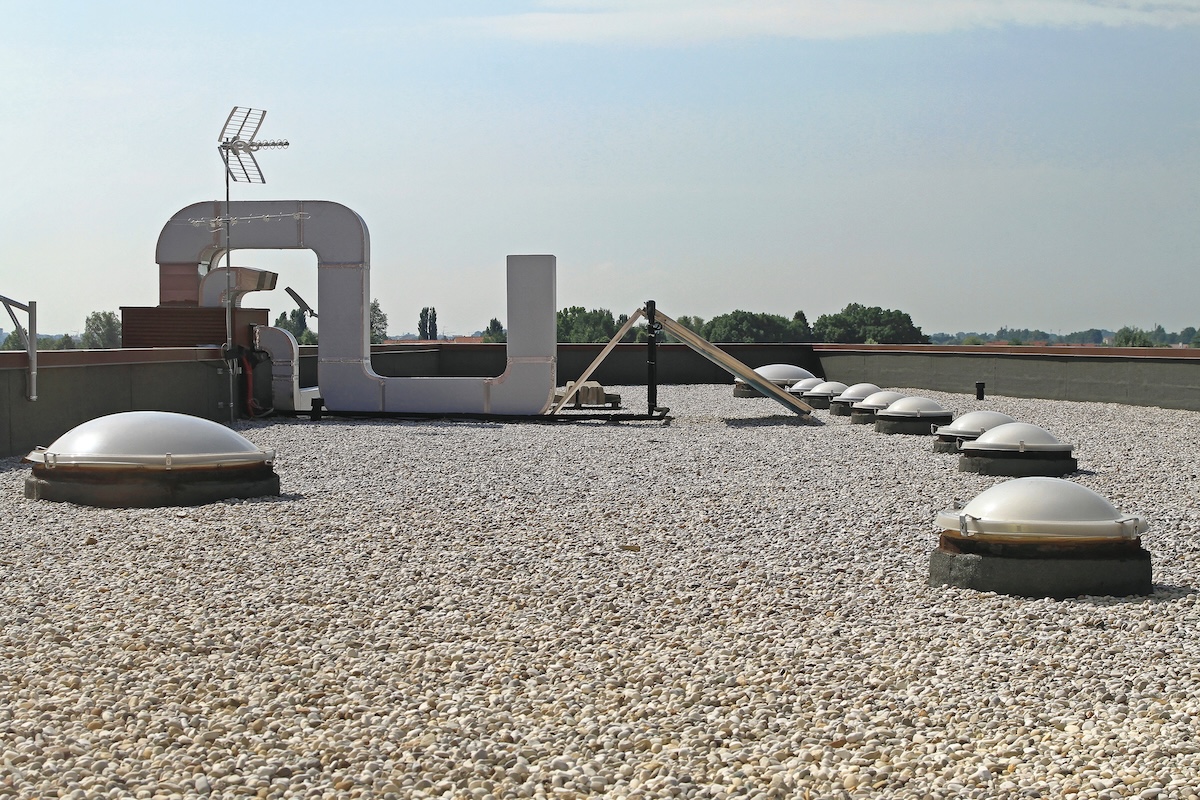
Built-up roofing — commonly called BUR — has been the workhorse system for commercial flat roofs across Indianapolis for more than a century, and thousands of Marion County buildings still carry BUR systems that were installed decades ago. Commercial Roofers Indianapolis provides BUR assessment, replacement, and recover for these aging systems with a clear-eyed analysis of whether a recover layer adds useful service life or whether full tear-off is the honest path. We use moisture core sampling, infrared scanning, and deck inspection to answer that question before writing a single dollar of scope.
A built-up roof is a multi-ply assembly of alternating felt (or fiberglass) reinforcing sheets and bitumen — hot asphalt or coal tar — applied in successive layers directly on the roof deck. The finished surface typically carries a flood coat of bitumen with embedded aggregate, mineral-surfaced cap sheet, or in more recent installations a modified bitumen cap sheet torched or cold-adhered over the BUR plies. The result is a monolithic, redundant waterproofing membrane with no seams except at flashings. When properly maintained, BUR systems on Indianapolis commercial buildings achieve 20- to 30-year service lives. The problem is that many of the BUR roofs we inspect haven't had documented maintenance in a decade or more, and deferred maintenance in Central Indiana's climate shortens that lifespan dramatically.
The single most expensive mistake an Indianapolis building owner can make with a BUR roof is recovering over wet insulation. A new membrane over saturated fiberboard or perlite insulation will blister, fail at seams, and void any manufacturer warranty within a few years. Before we write any scope on a BUR building, we perform moisture core sampling at a minimum of one core per 2,500 square feet and infrared thermography after dark on clear nights to map wet zones across the full field. If wet insulation is confined to less than 25 percent of the roof area, a targeted remove-and-replace with recover may be cost-justified. Beyond that threshold, full tear-off is almost always the correct recommendation, and we put both scenarios in writing with line-item cost comparisons so the owner can make an informed decision.
Central Indiana's climate creates a specific set of stressors for BUR systems. Freeze-thaw cycling — more than 100 events per year in the Indianapolis metro — works at every crack in an aged flood coat, opening fissures that allow water infiltration into the ply felt. Water that penetrates the membrane and reaches the insulation layer then freezes, expanding and delaminating the assembly from below. Summer UV accelerates oxidation of exposed bitumen surfaces, causing the flood coat to become brittle and lose its aggregate bond. The combination produces roofs that look marginally acceptable from the ground but have significant subsurface moisture and advanced edge-flashing deterioration when inspected closely. We encounter this pattern regularly on pre-1990 commercial buildings in Downtown Indianapolis and along older commercial corridors in Marion County.
When full tear-off is warranted, replacement of a BUR system on an Indianapolis commercial building typically means converting to a modern single-ply membrane — TPO, EPDM, or PVC — over new polyisocyanurate insulation. This is not a quality downgrade; modern single-ply systems perform equal to or better than new BUR at lower installed cost and with better energy performance. For buildings where BUR is preferred for historical or aesthetic reasons, we can install new BUR assemblies using SBS-modified bitumen plies with aggregate or granule-surfaced caps. For recover situations where the existing BUR deck is dry and structurally sound, a single-ply recover membrane mechanically attached or fully adhered over a cover board adds 20 or more years of service life at roughly 60 percent of full tear-off cost.
BUR flashings — reglets, counter-flashings, coping caps, and base flashings at walls and curbs — are consistently the first failure points on aged systems. The combination of thermal movement, bitumen oxidation, and masonry deterioration on older Marion County commercial buildings creates flashing separations that allow water to track behind the membrane and into the wall assembly. We replace all base and counter-flashings as part of any BUR project and inspect masonry parapets for repointing needs before installing new membrane. Ignoring the parapet while replacing the field membrane is a pattern that produces callbacks within two to three years, and we decline to scope it that way.
Every BUR project in Indianapolis closes with a written scope document, moisture-core test results, pre- and post-installation photography keyed to a roof plan, and manufacturer warranty documentation issued in the building owner's name. For recover projects, we provide a written comparison of the recover-vs.-replace analysis so the owner has documentation of the decision rationale for future capital planning reference. Portfolio owners managing multiple Indianapolis buildings receive a consolidated condition summary across all affected roofs.
Tell us about the building and the roof problem. We'll document it and put a plan in writing — with an honest repair-vs-replace recommendation and no upsell pressure.
Get a Roof Assessment →