Standing seam metal roofing for Indianapolis commercial buildings — Galvalume and Kynar-painted finishes, snap-lock and mechanical-seam systems, with 40-year substrate warranty paths sized for Indiana's freeze-thaw climate.
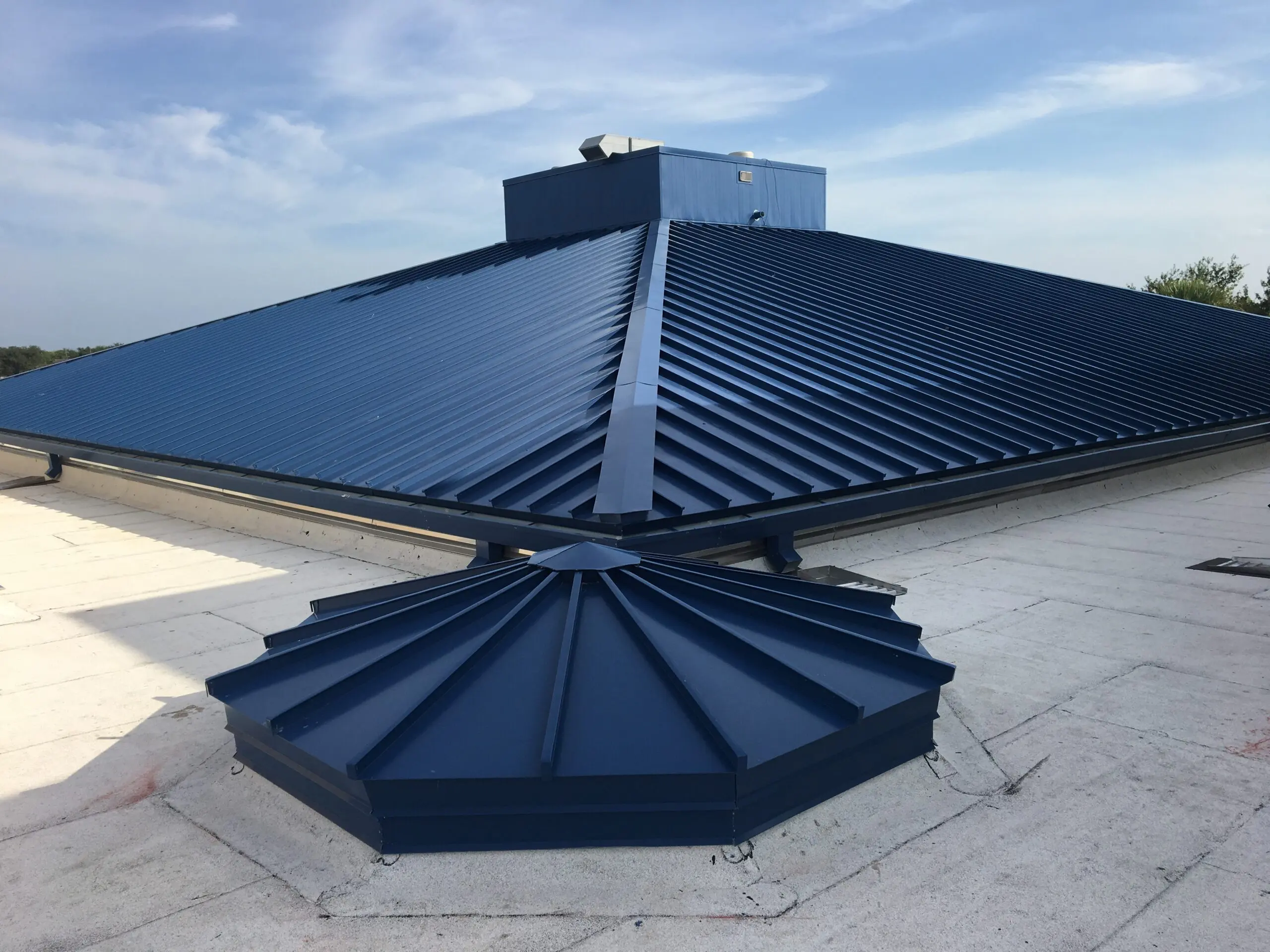
Standing seam metal roofing is the premium long-term roofing solution for Indianapolis commercial buildings that need a system capable of lasting 40 years or more with minimal maintenance. Its concealed fastener design eliminates the fastener penetrations that cause leaks in exposed-fastener metal panels, and its engineered seam geometry allows for the thermal expansion and contraction that Central Indiana's temperature extremes demand. Commercial Roofers Indianapolis installs standing seam metal roofing on commercial and industrial buildings across Marion County, and provides repair and retrofit services on existing standing seam systems throughout the I-465 corridor.
Standing seam metal roofing uses raised vertical seams that interlock adjacent panels without any exposed fasteners penetrating the panel face. Clips concealed within the seam attach the panels to the structural deck or purlins while allowing the panels to float laterally as they expand and contract with temperature changes. This is the critical difference from R-panel and corrugated metal roofing: exposed-fastener systems develop leak points at every screw as the washer seals age and the panels move around the fixed fastener. A standing seam system eliminates this failure mode entirely.
Commercial standing seam panels for Indianapolis buildings are most commonly fabricated from Galvalume steel — a zinc-aluminum alloy coating that provides long-term corrosion resistance against Central Indiana rainfall, snow, and seasonal humidity. Kynar 500 or Hylar 5000 PVDF paint finishes are standard for colored panel applications; these fluoropolymer coatings hold color and gloss for decades in Indiana UV conditions without chalking or fading to the degree that standard polyester finishes experience. Aluminum panels are available for applications requiring lighter weight or superior corrosion resistance in chemical-exposure environments. Panel widths, rib heights, and seam styles are selected based on span lengths, slope, and aesthetic requirements.
Central Indiana's climate presents specific performance requirements for standing seam metal roofing. The region's freeze-thaw cycling — sometimes multiple cycles per week during winter — demands a panel system with engineered clip movement rather than fixed fasteners. Snow load accumulation on Indianapolis commercial roofs can reach design levels on lower-pitched metal roofs; panel gauge and structural spacing must account for the 25 pounds per square foot ground snow load that Indiana building code uses as a baseline. Summer UV exposure is handled by Kynar or Hylar coating systems that retain their reflective properties over the full panel life. Hailstorms, which affect Marion County several times per decade with golf-ball or larger hail, leave dents in standing seam panels but rarely compromise their watertight integrity the way exposed-fastener panels fail after hail impact.
Standing seam metal roofing is used across a range of Indianapolis commercial building types. Sloped commercial applications include office buildings with visible roof elements, retail buildings with architectural roof features, and industrial facilities where the roof pitch allows metal panel installation. Low-slope and near-flat applications use structural standing seam systems designed specifically for slopes down to one-quarter inch per foot. Agricultural and industrial buildings along the I-465 industrial corridor frequently use standing seam as a replacement for aging R-panel systems, gaining concealed fasteners and a new 40-year system life without changing the building's structural framing.
Standing seam installation begins with structural verification — confirming that the existing purlins or deck can support the panel system and that fastener spacing meets the specified wind uplift requirements for Indianapolis's design wind speed. Panels are typically roll-formed on-site or delivered in custom lengths to minimize end laps. Installation proceeds from the eave upward, with clips installed at each structural member and panels snapped or mechanically seamed as each row is placed. Flashings at ridges, hips, valleys, curbs, and wall transitions are fabricated to match panel profile. The completed system carries a substrate warranty from the panel manufacturer and a workmanship warranty from the installer.
Tell us about the building and the roof problem. We'll document it and put a plan in writing — with an honest repair-vs-replace recommendation and no upsell pressure.
Get a Roof Assessment →