Commercial roofing for Indianapolis car wash facilities — assemblies engineered for nonstop interior humidity, chemical vapor, and the corrosion they drive into the deck below.
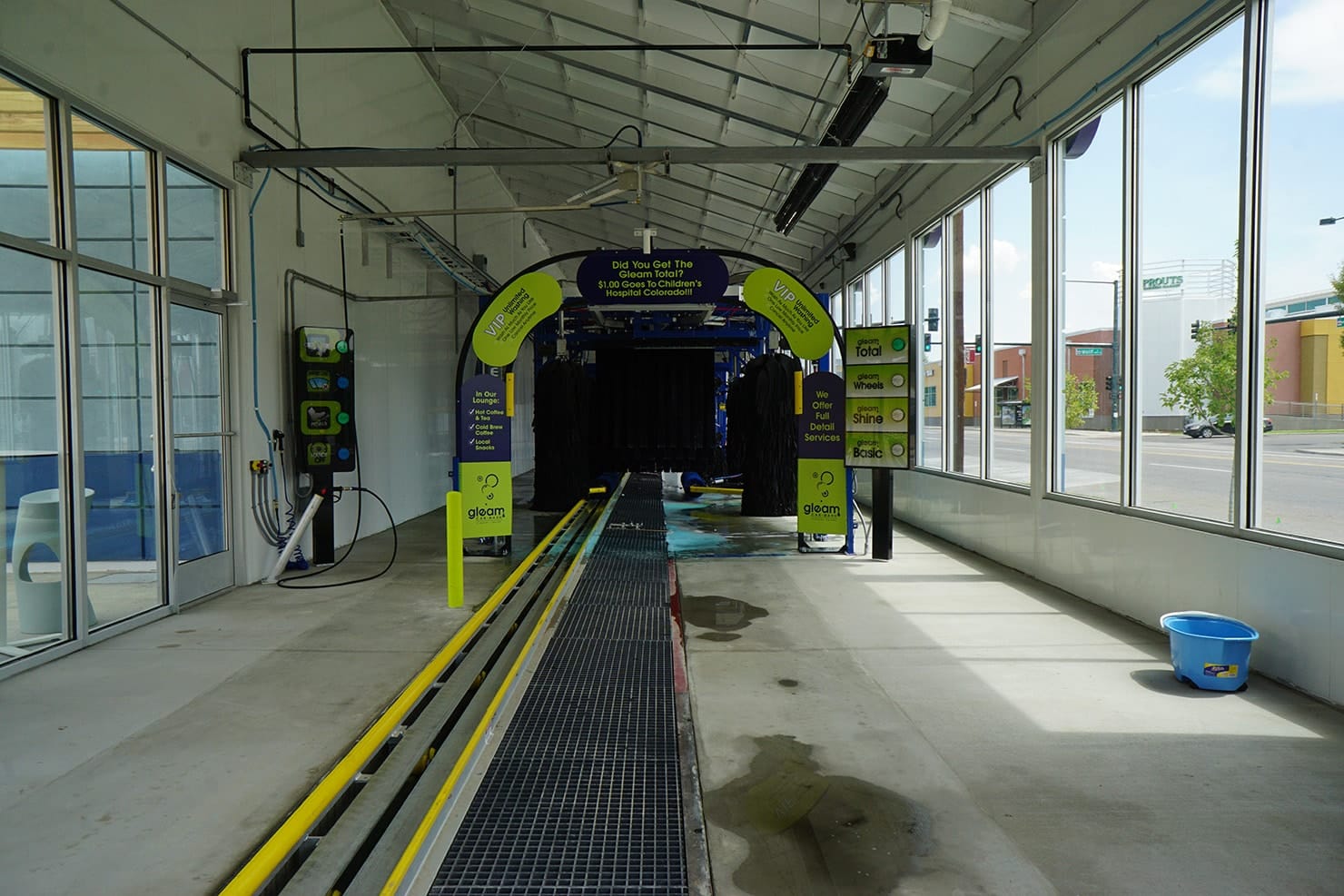
A car wash is one of the most punishing buildings we put a roof over. The bays run wet from open to close, and that moisture does not stay at floor level. Warm, saturated air rises into the deck, and the soaps, brighteners, and acidic presoaks atomized by the wash arches travel with it. Most of the roof failures we get called to on these buildings did not start with the membrane on top. They started underneath, where vapor and chemistry quietly went to work on the deck and the fasteners long before anyone saw a stain on a ceiling tile.
We work on car washes across the Indianapolis metro, from the express tunnels along East Washington Street and the US-31 corridor in Greenwood to the self-serve and full-service sites tucked into neighborhood retail strips in Castleton, Lawrence, and along Pendleton Pike. Whether it is a single-bay self-serve building or a 120-foot conveyor tunnel, the roof has the same problem to solve: keep an enormous, continuous load of interior moisture from destroying the structure it sits on.
On a normal commercial building, you worry about water getting in from the weather. On a car wash, the bigger threat moves the other direction. Inside the tunnel, relative humidity sits near saturation for most of the operating day. That warm vapor migrates up toward the cold underside of the roof deck, especially in an Indianapolis winter when the temperature difference across the assembly is severe. When it reaches a cold surface, it condenses.
If that condensation forms inside an assembly that was not designed to handle it, the results add up fast:
That is why a car wash roof is a vapor problem first and a weatherproofing problem second. We design the assembly to control where moisture goes, not just to shed rain.
The foundation of a durable car wash roof is a vapor retarder placed on the warm side of the assembly, directly over the deck, before any insulation goes down. On a wash building this is not optional detailing — it is the single most important layer in the system. A properly lapped and sealed vapor retarder keeps the saturated bay air from ever reaching the cold zone inside the roof where it would condense.
From there we make material choices that hold up to chemistry. We favor membranes and flashings with strong chemical resistance, and on most Indianapolis wash projects we steer toward a fully adhered single-ply over a mechanically attached system. Fully adhered means there are no rows of fasteners punching through the deck and the vapor retarder, which removes hundreds of small corrosion paths and keeps the retarder intact. For metal decks already showing rust, we assess whether the deck can be cleaned and recoated or whether sections need replacement before anything new goes on top — covering a corroding deck only buys a year or two.
Ventilation matters just as much as the roof. A wash that exhausts its humid air properly puts far less stress on the assembly than one relying on the roof to manage moisture it was never meant to absorb. We coordinate with the rooftop exhaust and the in-bay ventilation so the building actively moves wet air out instead of pushing it up into the deck.
Car wash roofs are crowded. Reclaim system vents, blower stacks, water heater flues, the dryer equipment on tunnel buildings, and HVAC for the lobby and pay stations all puncture the membrane. Every one of those penetrations is a place where vapor wants to escape and water wants to enter, and they sit in the most chemically aggressive air in the building.
We detail each one for this specific environment:
We also pay attention to drainage. A car wash building often has equipment crowded near the drains and a roof that has been walked hard by service techs. Ponding water on a chemically loaded roof shortens membrane life, so we confirm the slope actually carries water to the drains and that overflow scuppers are clear.
An Indianapolis car wash that closes is a car wash that is not making money, and on a busy site that loss is steep by the day. We schedule reroofs and major repairs to keep at least part of the operation running wherever the layout allows — staging work over the equipment room or lobby first, or sequencing a tunnel so cars keep moving. When a full shutdown is unavoidable, we keep it short and planned, and we coordinate around the early-morning and weekend peaks when wash traffic in this market is heaviest.
We protect the equipment below, too. The reclaim tanks, pumps, controls, and electrical in a car wash are expensive and unforgiving of water and debris. Tear-off over live equipment gets full containment so nothing rains down into the systems that keep the wash running.
Because the damage on a wash building hides underneath, regular inspection is how you stay ahead of it. We recommend looking at these roofs more often than a typical retail building — twice a year at minimum, and after any hard freeze-thaw stretch, which Indianapolis delivers reliably from December through March. On each visit we check the membrane and seams for chemical attack, probe for soft or wet insulation, look for fastener-backout and rust staining on the underside where we can access it, and clear the drains and scuppers of the soap residue and debris that collect on these roofs.
Catching a failing vapor retarder or a corroding deck early is the difference between a targeted repair and a full deck-up replacement. On a building this wet, that gap is measured in tens of thousands of dollars.
If you operate an express tunnel, a full-service site, or a self-serve building anywhere in the Indianapolis area and you are seeing ceiling stains, rust at the deck, or a roof that simply will not stay dry, the problem is almost always the assembly fighting the moisture instead of managing it. We will walk the roof, inspect the deck and fasteners from below where we can, and lay out a system built for the one thing your building does every single day — run wet. Reach out to schedule an evaluation and we will give you a straight assessment of what your roof needs.
Tell us about the building and the roof problem. We'll document it and put a plan in writing — with an honest repair-vs-replace recommendation and no upsell pressure.
Get a Roof Assessment →