Commercial roof coating systems for Indianapolis flat roofs — silicone, acrylic, and polyurea applied over existing TPO, EPDM, modified bitumen, and metal roofs. Extend service life and restore reflectivity without full tear-off.
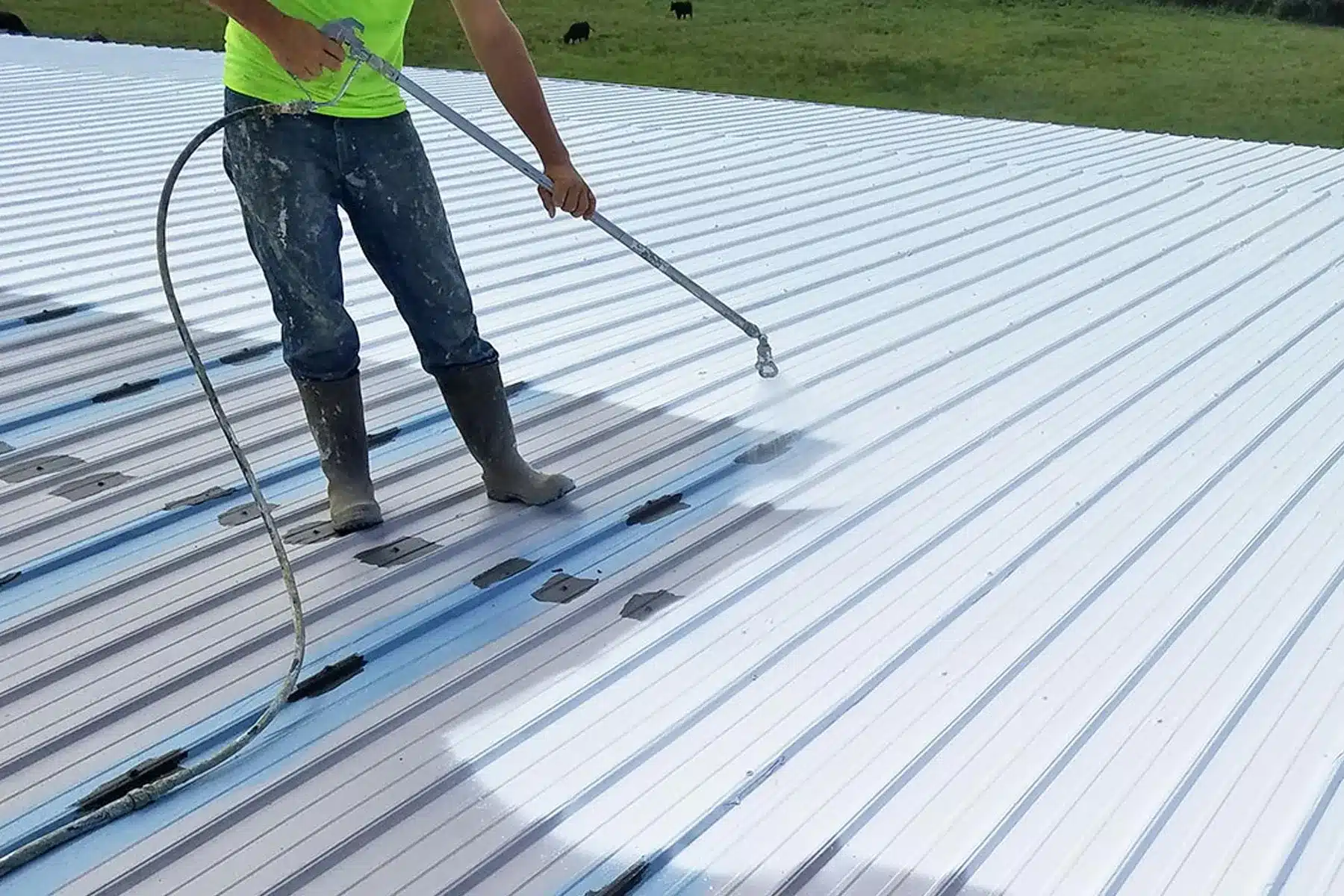
Commercial roof coating systems offer Indianapolis building owners a documented path to extending membrane service life by 10 to 20 years — without the cost and disruption of full tear-off — when the underlying roof assembly meets the qualification criteria. Commercial Roofers Indianapolis installs silicone, acrylic, and polyurea coating systems over existing TPO, EPDM, modified bitumen, and metal roofs across the Central Indiana market, following a substrate qualification protocol that ensures the coating is going on a roof that can support the warranty being offered. Applied to the wrong substrate, a coating is expensive waste. Applied to the right one, it is one of the most cost-effective tools in a building owner's CapEx toolkit.
A fluid-applied roof coating is a seamless, elastomeric membrane applied in one or more passes directly over the existing roofing surface. The coating bridges small cracks and open lap seams, reflects UV radiation, and adds a new waterproofing layer without requiring removal of the existing membrane. Silicone coatings are the most UV-resistant and perform best in ponding-water conditions — critical on Indianapolis flat roofs where drainage is often marginal. Acrylic coatings are water-based, lower-VOC, and appropriate for roofs with good drainage and surfaces that can be kept dry during application. Polyurea systems provide the highest tensile strength and fastest cure, making them suitable for heavily foot-trafficked mechanical areas and roofs with unusual substrate conditions.
The most important part of any commercial coating project on an Indianapolis building is the work done before the first bucket is opened. Coating over wet insulation produces a trapped-moisture condition that accelerates membrane failure from below. Coating over delaminated or severely oxidized EPDM reduces adhesion to the point where the coating peels within one or two winters. We perform moisture core sampling at a minimum of one core per 2,500 square feet and infrared thermography to map wet zones before writing any coating specification. We require that wet insulation areas are removed and replaced, that delaminated membrane sections are re-secured, and that open seams are filled with compatible reinforcing fabric before the coating is applied. Skipping these steps to reduce upfront cost is not a shortcut we take.
Central Indiana's climate places specific demands on coating system selection. The freeze-thaw cycle — more than 100 events annually in the Indianapolis metro — requires a coating with high elongation at cold temperatures so it doesn't crack and delaminate at the seam between freeze cycles. Silicone coatings maintain elasticity at low temperatures better than most acrylics and are our first choice for roofs where ponding water is present, since silicone is fully waterproof even under standing water. Summer UV is equally aggressive in Indianapolis, and reflective white coatings reduce rooftop surface temperatures by 40 to 60 degrees Fahrenheit, meaningfully reducing cooling loads on occupied buildings and extending the service life of the underlying membrane by slowing thermal cycling stress.
Coating application on an occupied commercial building requires attention to fume management, access control, and phasing. We schedule application to minimize odor impact on building occupants — silicone in particular produces solvent fumes during application that require ventilation management in buildings with rooftop air intakes. Application goes on in two full passes with reinforcing fabric embedded at all seams, flashings, and penetrations. We do not apply coating when ambient temperatures are below 40°F or when rain is forecast within 24 hours, both of which affect adhesion and cure. Indiana spring and fall weather windows for coating application are narrow, and we plan our coating schedule conservatively to account for the weather unpredictability typical of the I-465 corridor in March, April, October, and November.
Manufacturer-backed coating warranties for Indianapolis commercial buildings are available at 10-, 15-, and 20-year terms depending on coating system, installed mil thickness, and the condition of the underlying substrate at time of application. A 10-year NDL (No Dollar Limit) manufacturer warranty is the standard baseline for a properly qualified and installed silicone coating on a sound EPDM or TPO substrate. 15- and 20-year warranty paths require additional mil thickness and in some cases a second brand of reinforcing fabric. We present the warranty options with the mil-thickness requirements and cost differentials so the building owner can select the coverage level that matches their planning horizon.
Every coating project in Indianapolis closes with a written scope document, moisture-core test results from the pre-application survey, application mil-thickness readings from the finished surface, and manufacturer warranty documentation issued in the building owner's name. For portfolio owners managing multiple Marion County properties, we can coordinate coating projects across buildings in sequence to align with your capital planning calendar.
Tell us about the building and the roof problem. We'll document it and put a plan in writing — with an honest repair-vs-replace recommendation and no upsell pressure.
Get a Roof Assessment →