Commercial roofing for public and private schools, K-12 campuses, and educational facilities throughout Indianapolis, IN.
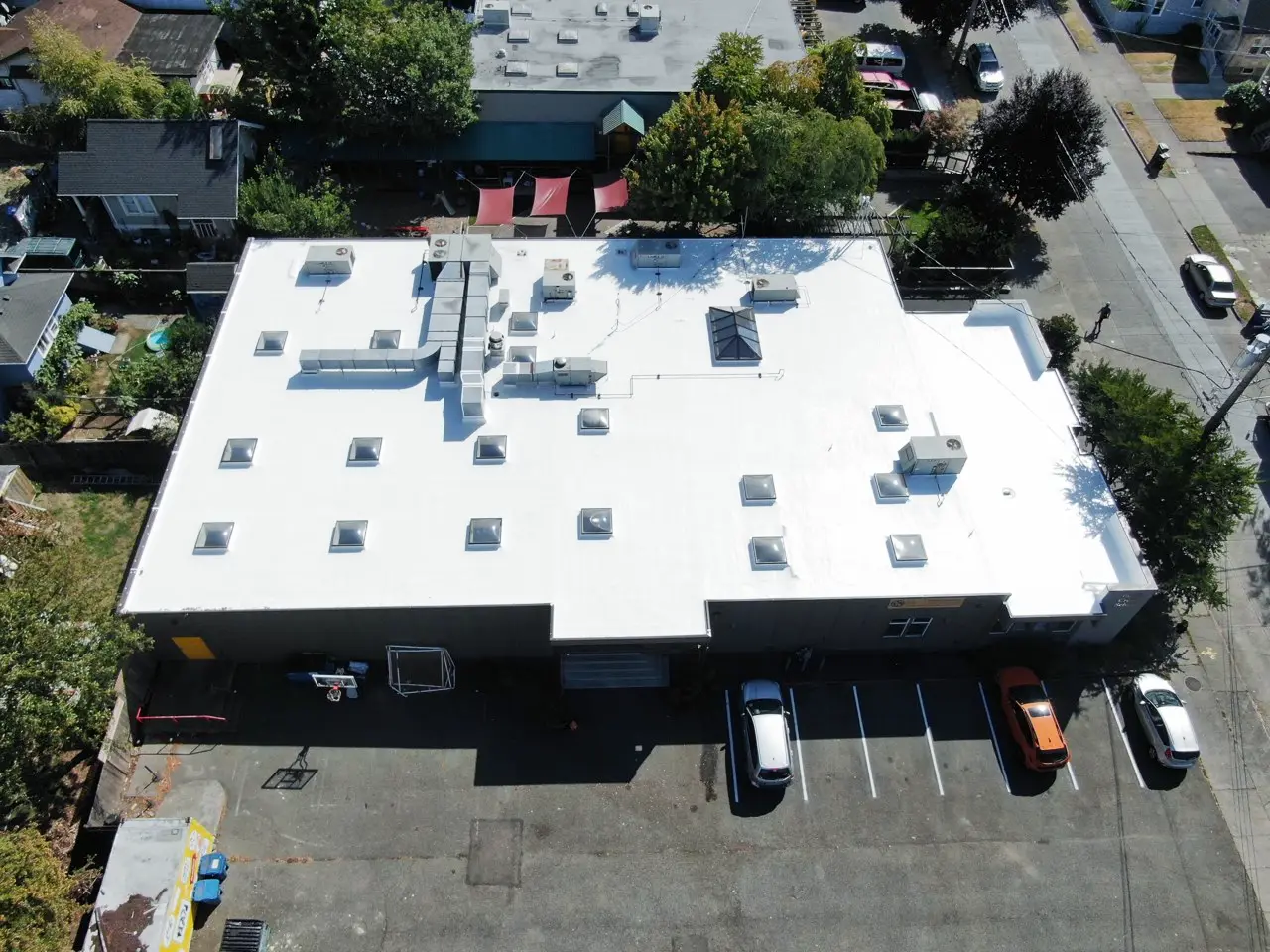
Indianapolis-area public and private schools operate on compressed project windows, tight budgets with taxpayer accountability, and strict access requirements that set school roofing apart from standard commercial work. Whether a K-12 campus in Marion County needs a single building repaired, a phased replacement across multiple structures, or a long-term maintenance program that protects roofs through their full service life, the work requires a contractor who understands occupied school environments and can deliver within the constraints of academic calendars and board-approved budgets.
School buildings across Central Indiana tend to be large, low-slope structures with high penetration density — HVAC units, exhaust fans, skylights, and roof hatches — that create numerous potential leak points. Many Indianapolis-area campuses include buildings constructed over several decades, meaning a single campus may have TPO on newer additions, built-up roofing on the original structure, and modified bitumen on a gymnasium wing. Each system has different repair and replacement implications, and they must all be assessed and managed together as part of a campus-wide condition picture.
The most important scheduling constraint for Indianapolis school roofing is the academic calendar. Most K-12 replacement and major repair projects must be completed during the summer break window — typically late May through mid-August in Indiana. That window is shorter than it looks: it excludes teacher setup days, custodial preparation time, and any buffer for weather delays. Production sequencing for summer school roofing must be aggressive, with roofing crews sized to close each zone before the school year resumes, and weather contingencies built into the schedule from the start.
Central Indiana's freeze-thaw cycle is particularly damaging to school flat roofs because building heat loss through the roof deck creates ice dam conditions at parapet walls and low-slope transitions. Summer heat loading on dark-surface built-up roofs can accelerate blister formation and membrane fatigue. School gymnasiums and multi-purpose buildings often have large, uninterrupted roof fields with minimal internal supports, making them susceptible to ponding water where drains are undersized or partially blocked by debris. Maintenance programs that include semi-annual drain clearing and annual membrane inspections address all three of these failure modes.
TPO is the dominant replacement membrane for Indianapolis school buildings due to its reflective surface (lowering cooling loads in occupied classrooms), its weldability at penetrations and details, and its NDL manufacturer warranty options. EPDM remains common on older school replacements and is a reliable system when fully adhered. Modified bitumen with granulated cap sheets is often used on lower-slope sections. Tapered insulation systems are frequently incorporated during replacement to improve drainage on aging decks that have settled or lack adequate slope to drain.
Indianapolis public school projects often require public bidding processes with written specifications that conform to AIA or CSI formats. Pre-bid roof condition reports, written scopes of work, and material specification sheets are standard deliverables that support the bid package. After project completion, closeout documentation including manufacturer warranty registration, inspection reports, and as-built drawings gives the school district a complete record for its asset management files and bond program reporting.
Tell us about the building and the roof problem. We'll document it and put a plan in writing — with an honest repair-vs-replace recommendation and no upsell pressure.
Get a Roof Assessment →