Emergency commercial roof repair response across Indianapolis — same-day dry-in for storm damage, sudden leaks, and hail events. Active response across Marion County and the Indianapolis metro.
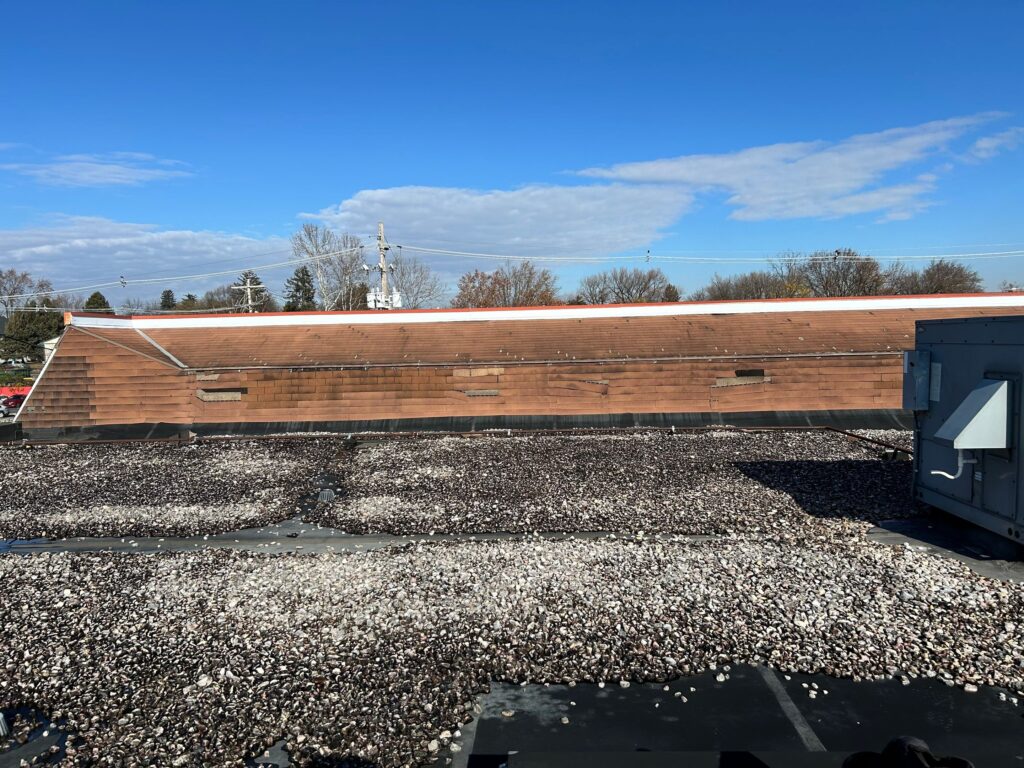
A sudden leak at 3 PM on a Tuesday with tenants, inventory, or equipment at risk is not the moment to search for a contractor. Commercial Roofers Indianapolis provides emergency commercial roof repair response across Indianapolis and Marion County — same-day dry-in for storm damage, sudden leaks, and hail events — with active dispatch coverage across the metro. When we arrive at an emergency, we stop the water entry and protect the interior first, scope the permanent repair second, and give you a written record of everything we did and found before we leave the site.
Emergency commercial roofing response on Indianapolis buildings covers a broad range of sudden failure conditions. Hail damage that opens penetrations in single-ply membrane, wind events that lift membrane edge terminations or blow off parapet coping, storm debris that punctures the field, sudden seam failures that appear without obvious cause after a heavy rain event, and HVAC access panels left open or improperly closed by mechanical contractors — these are the most common emergency scenarios we respond to across Marion County. The immediate response in all cases is the same: deploy temporary dry-in to stop interior damage, document the failure location and mechanism with photography, and provide a clear written account of what was done so the permanent repair can be scoped with complete information.
Emergency dry-in on an Indianapolis commercial building takes one of several forms depending on the failure type and scale. For localized membrane penetrations, open seams, or failed flashing terminations covering less than 50 to 100 square feet, we apply compatible membrane patch material, reinforced with fabric and adhered or heat-welded to the existing membrane as the substrate allows. For larger areas of damage — hail events that affect multiple zones, wind uplift that displaces membrane over large sections — we deploy ballasted temporary cover material secured with appropriate anchoring to prevent uplift in subsequent weather. For failed parapet or edge flashings, we apply temporary counter-flashing or coping cover that prevents water infiltration at the wall while permanent replacement is planned. Every dry-in is documented with before-and-after photography and a written emergency service report.
Central Indiana's severe weather calendar is one of the most demanding in the Midwest for commercial roofing. Spring hail events — frequently above 1-inch diameter in the Indianapolis metro — cause immediate puncture damage in EPDM membranes and surface bruising in TPO and PVC that may not appear as active leaks for weeks or months. Summer thunderstorms with straight-line winds in excess of 60 MPH produce edge-flashing uplift failures on mechanically attached single-ply membranes across the I-465 corridor. Fall freeze events in late October and November harden aged membrane and can crack already-compromised sections during the first hard freeze. We stay current on severe weather events in Marion County and proactively contact buildings in our maintenance program after significant events to assess whether an emergency visit is warranted.
Active water infiltration into an occupied commercial building can damage inventory, finishes, electrical equipment, and tenant improvements in ways that far exceed the cost of the roof repair itself. When interior damage is ongoing at the time of our emergency arrival, we prioritize stopping the water entry above everything else — dry-in goes on immediately rather than after a full diagnostic sequence. We work in coordination with the building manager to identify what interior assets are at risk and ensure that water is no longer reaching them before we shift into diagnostic mode. If active leaking cannot be fully stopped by temporary dry-in — during an active storm event, for example — we assist in deploying interior containment to protect assets while waiting for conditions that allow exterior work.
Emergency dry-in is always temporary. Within 48 to 72 hours of the emergency response, we provide a written permanent repair scope that documents the root cause, the recommended permanent repair, the materials and methods involved, and the cost. For insurance claims, we structure the scope documentation to support the claim submission with clear separation of storm-caused damage from any pre-existing conditions that are not part of the claim. Permanent repair is scheduled as promptly as our production calendar and weather permit — we do not leave emergency dry-in in place for extended periods and treat permanent repair scheduling as urgent.
Emergency commercial roof repair on Indianapolis buildings frequently involves insurance claims for storm damage. Our emergency response documentation is structured to support the claim process: dated photography of the damage location and mechanism, a written assessment of whether damage is storm-caused or pre-existing, a scope that separates covered damage from maintenance items, and a cost breakdown that matches the format most commercial property insurance adjusters request. We work with the owner's adjuster when requested and can provide supplemental documentation if the initial claim requires additional support.
Tell us about the building and the roof problem. We'll document it and put a plan in writing — with an honest repair-vs-replace recommendation and no upsell pressure.
Get a Roof Assessment →