Commercial roofing for city halls, courthouses, fire stations, police stations, and public facilities throughout Indianapolis, IN.
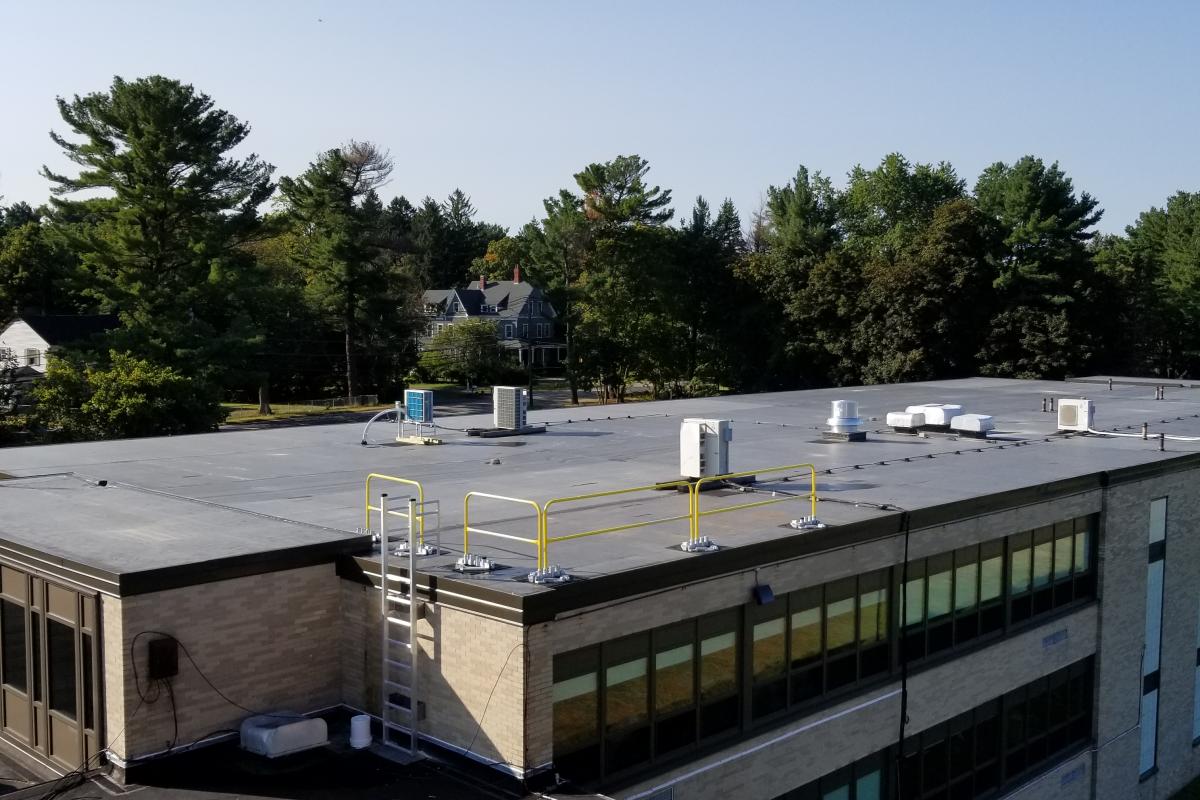
City halls, courthouses, fire stations, public libraries, and other municipal and government facilities in Indianapolis and Marion County present a distinct set of roofing requirements. These buildings operate continuously, often house sensitive records or equipment, and are subject to public procurement processes that demand detailed written scopes, verifiable credentials, and clear documentation of every phase of the work. A roofing contractor serving Indianapolis government buildings must understand not only the technical requirements of large commercial flat roofs but also the documentation, insurance, prevailing wage, and warranty standards that public owners require before work can begin.
Indianapolis government buildings span a wide range of ages and roof types. Older facilities — courthouses, historic city-owned properties, and pre-1980 public schools — often carry built-up roofing (BUR) systems or early modified bitumen applications that have exceeded their design life and require full replacement. Newer construction and recent capital replacements typically use TPO, EPDM, or PVC single-ply membranes with polyisocyanurate insulation. Fire stations and emergency dispatch facilities often have metal roofing on lower-slope sections with single-ply on flat portions. The roofing specification for any public building must match the building's structural capacity, occupancy, and the owner's warranty and maintenance expectations — not simply default to the lowest-cost system.
Government buildings in Indianapolis operate seven days a week in most cases. Police stations, fire stations, utilities facilities, and courts cannot vacate their roofs during business hours without coordinated planning. Roofing work on occupied public buildings requires phased scheduling, temporary waterproofing at the end of each daily work segment, and documented communication with building managers at the start and end of every shift. For multi-story government buildings downtown or in the I-65/I-70 corridor, staging materials without blocking emergency access routes is a logistical requirement, not an afterthought. A qualified roofing contractor for public buildings in Marion County will submit a written access and phasing plan before work begins, not improvise it on the fly.
Municipal and county buildings in Indianapolis are typically governed by public procurement ordinances that require competitive bidding, prevailing wage compliance, certified payroll reporting, and bonding thresholds that exceed standard commercial work. Submittals — shop drawings, product data sheets, manufacturer approvals, and safety data sheets — are required before materials arrive on site. RFI and change order logs must be maintained throughout the project. At project closeout, the public owner typically requires an extensive documentation package: as-built drawings, manufacturer warranty registration, inspection reports, lien waivers, and maintenance recommendations. Contractors who are not familiar with public construction administration in Indiana add delays and compliance risk to an otherwise straightforward roofing project.
Many Indianapolis government buildings were constructed with minimal roof slope — particularly large-footprint structures like service centers, maintenance facilities, and older public schools. In Central Indiana's climate, low-slope roofs with poor drainage are vulnerable to ponding during spring storm events and ice dam formation at roof edges and drains in winter. Freeze-thaw cycling over flat or minimally sloped roofing systems accelerates membrane deterioration and seam fatigue at a rate that is higher than in warmer climates. Specifying internal drains with overflow scuppers, adequate insulation R-value for Indiana's climate zone, and a membrane system rated for ponding resistance addresses the structural reality of many Indianapolis public buildings rather than relying on the drainage assumptions that may have been adequate when the building was first constructed.
Marion County and Indianapolis government real estate portfolios often include dozens of buildings across multiple sites — parks facilities, branch libraries, maintenance yards, municipal offices. A documented roof maintenance program that covers all sites, schedules semi-annual inspections, tracks warranty expiration dates, and produces condition reports that can be used in capital budget requests is far more cost-effective than reactive repair-by-emergency. Multi-building maintenance agreements allow public owners to forecast roof capital expenditures with enough lead time to include them in annual budget cycles, rather than discovering a failing roof in October and scrambling for an emergency appropriation.
Every project on an Indianapolis government or public building begins with a written scope of work that can be incorporated into a bid package or contract. The scope identifies the existing system type, the proposed work sequence, material specifications, safety and access requirements, and the documentation to be delivered at closeout. Upon completion, the building manager receives the manufacturer warranty, certified payroll records if applicable, as-built photographs, a roof diagram with drainage locations and penetration inventory, and a recommended maintenance schedule aligned with the warranty's maintenance requirements. This package supports both the facility manager's ongoing stewardship and the public agency's capital planning obligations.
Tell us about the building and the roof problem. We'll document it and put a plan in writing — with an honest repair-vs-replace recommendation and no upsell pressure.
Get a Roof Assessment →