Storm Damage Roof Repair & Insurance Claims in Indianapolis, IN — commercial roofing assessment, documentation, and program management for IN property owners.
Indianapolis and Marion County sit in the heart of Midwest storm country. Hail events, straight-line wind damage, and tornado-adjacent squalls strike the region multiple times each year, and commercial roofs are the first and most exposed surface to bear the impact. Storm damage roof repair for commercial buildings is a distinct discipline — it combines rapid-response emergency stabilization, systematic damage documentation for insurance purposes, and durable repair work that restores the roof's waterproofing function before the next rain event. Acting quickly and methodically after a storm protects both the building and the insurance claim.
Hail is the most common storm damage trigger for Indianapolis commercial property insurance claims. Hailstones impact single-ply membranes (TPO, EPDM, PVC) and create bruising, micro-punctures, and in severe cases visible tears. Modified bitumen and built-up roofing surfaces show hail impact as circular cratering with granule displacement. Metal roofing panels develop dents that can crack coatings and eventually allow rust penetration. Smaller hailstones that look minor from the ground may cause aggregate loss on cap sheets and membrane surface damage invisible without a close inspection.
Wind damage presents differently — membrane blow-off at perimeter edges where terminations have weakened, lifted or missing edge metal, displaced rooftop equipment, and torn penetration flashings. After high-wind events, the most urgent inspection priority is the perimeter: if edge metal has lifted, the membrane is at immediate risk of further peeling in subsequent wind events, and emergency re-attachment is required the same day.
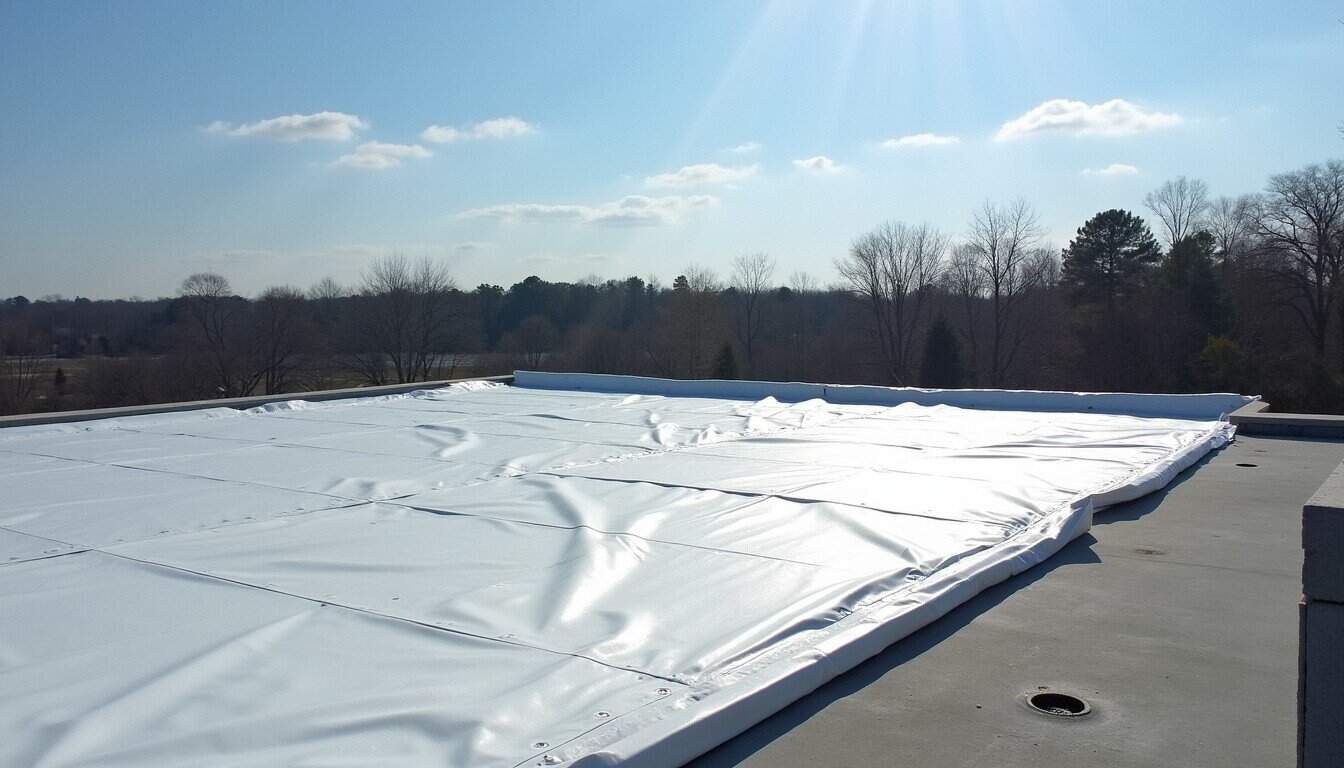
The first priority after a damaging storm is preventing water intrusion at any breach while a full assessment is completed. Temporary repairs — heavy-duty polyethylene sheeting secured with ballast, emergency patch materials, or temporary re-sealing of lifted flashings — are applied at any confirmed breach point the same day the damage is identified. Temporary repairs are clearly photographed and documented separately from the permanent damage record. This matters for the insurance claim: the carrier needs to see what the damage was before temporary repairs were made, not just the temporary repair itself.
Interior building inspection is part of the emergency response. Ceiling tiles, equipment, and interior finishes below any confirmed or suspected breach are checked and photographed. Interior water damage is documented immediately because it establishes the causal connection between the storm event and interior loss — a connection that may be disputed if interior damage is allowed to dry and recover before it is recorded.
Commercial roof insurance claims in Indiana require documentation that connects the observed damage to the specific storm event. This means collecting storm report data (NOAA storm event records, local news reports, neighboring building damage reports), taking comprehensive roof-level photographs with date stamps and GPS coordinates, and producing a written damage assessment that describes each affected area, its location on the roof plan, the damage type, and the estimated repair scope. This documentation is submitted to the carrier's adjuster alongside the claim.
Insurance adjusters for commercial property claims in Indianapolis are experienced at hail and wind damage assessment, but they work from the documentation provided. An incomplete or unorganized damage record creates unnecessary disputes about scope. A thorough written report, a complete photo set, and a line-item repair estimate give the adjuster what is needed to process the claim efficiently.
Permanent storm damage repairs on Indianapolis commercial flat roofs typically include membrane patch repairs at puncture and tear locations, replacement of damaged or missing edge metal, re-flashing of penetrations where impact or debris caused flashing displacement, replacement of any insulation that was saturated as a result of the storm breach, and re-attachment and sealing of any lifted membrane areas at seams or perimeter terminations. All repair materials are compatible with the existing membrane system — membrane patches on EPDM roofs use EPDM material; TPO patches use TPO material, heat-welded to match the existing membrane performance.
Where hail damage is widespread across the membrane surface rather than concentrated in discrete puncture points, the repair scope may include surface treatment, recover, or full replacement depending on membrane type, age, and the extent of damage. A thorough post-storm assessment distinguishes between localized patch repair and systemic damage requiring a larger scope.
Indianapolis summer storm seasons often produce multiple events within days or weeks of each other. If full permanent repairs cannot be completed before the next anticipated event, the temporary stabilization strategy must be reviewed and reinforced. Drains are cleared immediately after any storm — debris from the storm event frequently blocks drains and creates ponding that compounds membrane stress. Any rooftop equipment displaced by wind is secured before the next forecast event.
Completed storm damage repairs are documented with before-and-after photographs, a written scope of repairs performed keyed to the roof plan, and workmanship documentation supporting both the insurance claim and any warranty on repair materials. Where the storm event qualifies for manufacturer warranty coverage (some membrane warranties include hail coverage), that claim process is initiated alongside the property insurance claim. Post-repair documentation is retained in the roof's maintenance file as a record of the event and the remediation taken.
Tell us about the building and the roof problem. We'll document it and put a plan in writing — with an honest repair-vs-replace recommendation and no upsell pressure.
Get a Roof Assessment →