Industrial Roofing for manufacturing facilities, warehouses, and industrial buildings throughout Indianapolis metro.
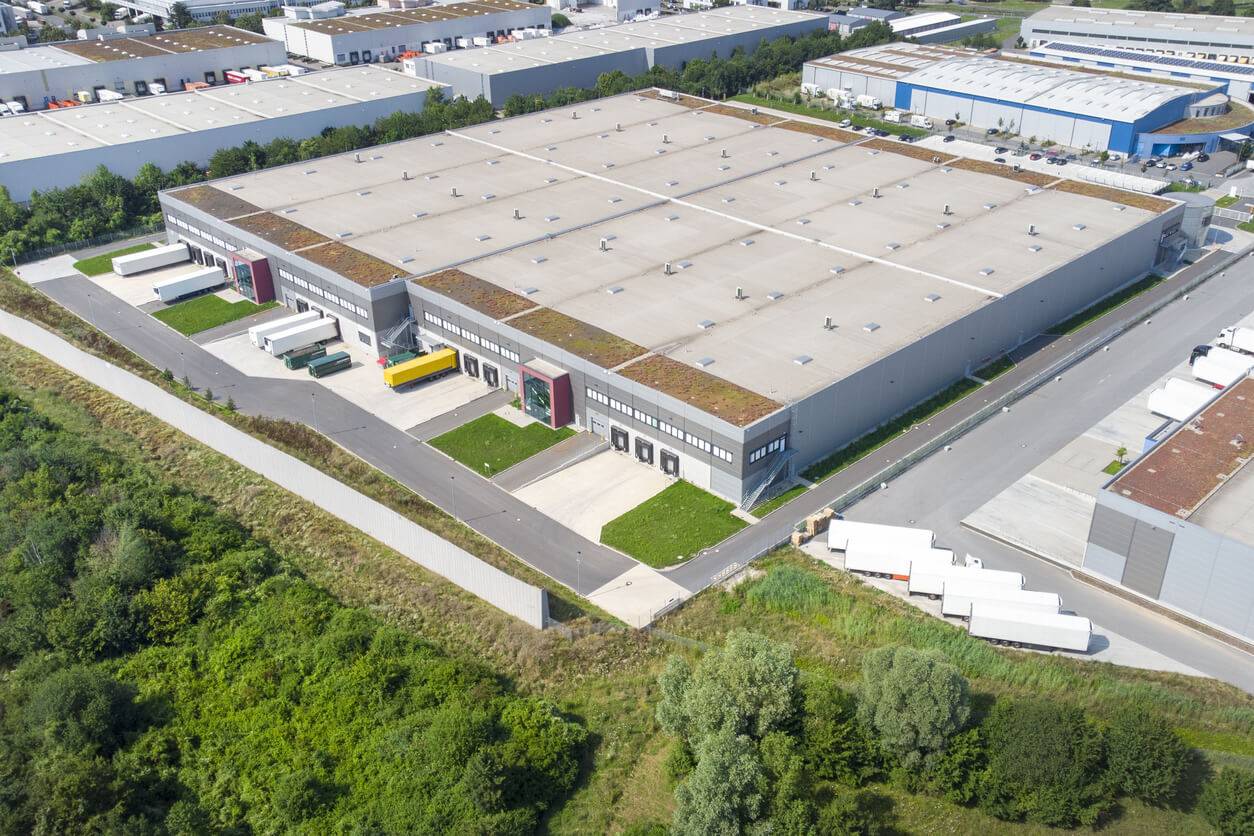
Indianapolis is one of the Midwest's primary industrial and logistics hubs, with manufacturing facilities, distribution centers, and warehousing operations concentrated along the I-465 belt, the I-70 corridor east of downtown, and the growing industrial developments in Plainfield, Whitestown, and Greenfield. Industrial buildings present roofing conditions that differ fundamentally from office or retail work: large clear-span metal decks, interior heat and humidity from manufacturing processes, heavy rooftop equipment loads, and operational schedules that leave few windows for interior-disrupting roof work. Industrial roofing in Central Indiana requires contractors who understand structural loading, attachment engineering, and the specific membrane and insulation systems that perform in production environments.
The majority of Indianapolis industrial buildings — particularly those constructed since the 1990s — use metal deck assemblies with mechanically attached single-ply membranes. TPO is the dominant membrane in new industrial construction due to its white reflective surface (which reduces cooling loads in large un-air-conditioned warehouses), heat-welded seam strength, and cost-effective installation at large scale. EPDM mechanically attached systems are common on older industrial buildings and remain a standard option for recover projects. Standing seam metal roofing appears on some industrial facilities, particularly office-warehouse hybrids and facilities where the owner's aesthetic standards align with metal's appearance. Modified bitumen is common on older Indianapolis industrial buildings constructed before 1990 and is regularly encountered as the existing system on recover and replacement projects.
Indianapolis industrial buildings regularly exceed 200,000 square feet of footprint, and some distribution centers along the I-70 and I-74 corridors approach 1 million square feet. At this scale, wind uplift engineering becomes a primary specification driver. The roof must be divided into field, perimeter, and corner zones with different fastener spacing requirements in each zone to meet the wind pressure calculations for the specific building location and height. The corner zones of large industrial roofs — where wind uplift loads are highest — require fastener patterns that can be 2–3 times denser than the field zone. Submitting to the manufacturer's pull-test requirements and having the structural engineer of record approve the attachment pattern are prerequisites for obtaining a valid manufacturer warranty on a large Indianapolis industrial roof.
Industrial processes create roofing conditions that standard commercial office specs do not address. High-heat manufacturing operations — forges, heat treating, food processing — elevate interior temperatures and humidity, creating vapor pressure that drives moisture into the roof assembly from below. Without a properly specified vapor retarder at the warm side of the insulation, condensation accumulates in the polyiso insulation over time, reducing R-value and eventually causing structural deck corrosion. Indianapolis industrial buildings with wet processes — food production, chemical manufacturing, metal fabrication with coolant systems — require vapor retarder specifications that account for the actual interior conditions, not the conservative assumptions used for a dry office building. A building science review of the interior humidity load is the foundation of a correct insulation and vapor retarder specification.
Many Indianapolis manufacturing facilities operate continuous or near-continuous production schedules. Re-roofing a production facility without disrupting operations requires phased construction with daily waterproofing closeout, coordination with production scheduling to identify which roof sections can be opened on which days, and material staging plans that keep crew and materials away from active production areas. Tear-off operations create vibration and noise that affect precision manufacturing and quality-sensitive processes; scheduling tear-off phases for shutdown weekends or between production shifts reduces impact on the production floor. Some facilities require contractor employees to complete site-specific safety training and badging before they are permitted on the property — a requirement that must be built into the project schedule, not discovered on the first day.
Central Indiana's freeze-thaw cycling, summer UV exposure, and spring storm wind events affect industrial roofs the same way they affect any commercial roofing system — but at larger scale, the consequences of failure are proportionally larger. A single failed drain on a 500,000 square foot distribution center in Marion County can flood a floor area that causes millions in inventory damage before the leak is located. Semi-annual drain inspections, annual membrane condition walks, and quarterly drain clearing are minimum maintenance practices for large industrial roofs in Indianapolis. The flat-roof design of most industrial buildings in the metro means that ponding water tolerance — the membrane's ability to perform under standing water for extended periods — is a critical selection criterion rather than a secondary consideration.
Industrial roofing projects begin with a written scope that addresses the attachment method, fastener pattern engineering for the building's wind uplift zone, insulation specification with vapor retarder provisions if applicable, and a phasing plan compatible with the facility's production schedule. For large-footprint buildings, a pre-installation pull test confirms fastener holding capacity in the specific deck before the full installation proceeds. Upon project completion, the owner receives manufacturer warranty documentation, as-built photographs, a drain and penetration inventory, and a maintenance schedule. For multi-building industrial portfolios, condition reports formatted for capital planning purposes are available as a separate deliverable.
Tell us about the building and the roof problem. We'll document it and put a plan in writing — with an honest repair-vs-replace recommendation and no upsell pressure.
Get a Roof Assessment →